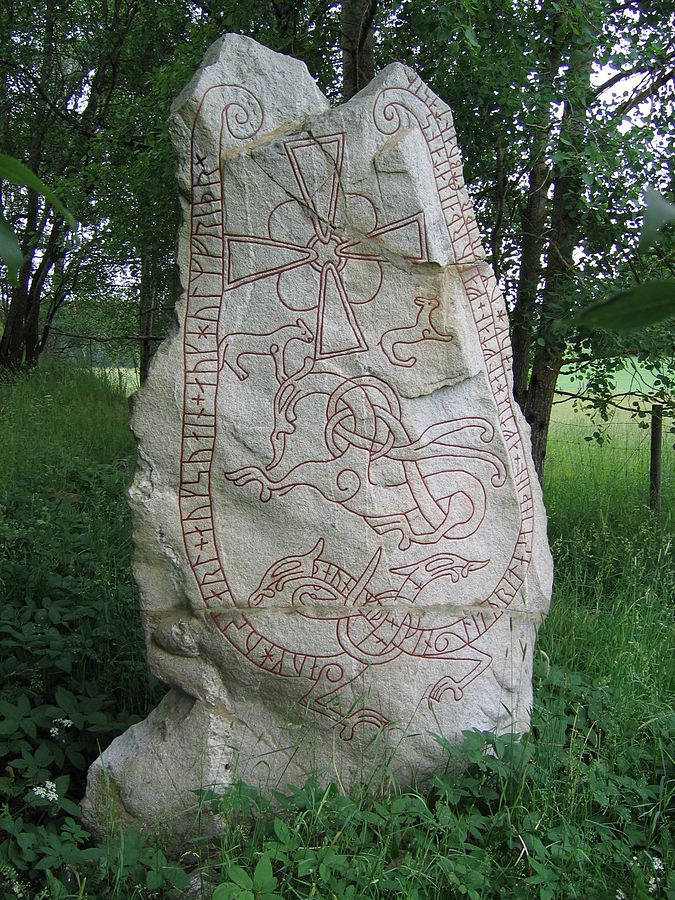
The Lingsberg runestone known as U 240, from the 11th century. near Vallentuna, Sweden
This time in Language Day an interesting, but not a very current subject: rune stones and the rune alphabet. A fitting subject nevertheless, and certainly something that most of us don’t know a whole lot about!
Most runestones date from the late Viking Age and are located in Scandinavia, notably in Sweden. But a few are scattered elsewhere, in places visited by Norsemen. Runestones are often memorials to dead men, and most of them used to be brightly colored, but the colors have long since faded. So it goes without saying that the picture you see here has been refreshed as far as colors go - something that many tombstones would benefit from as well.
But how do we know what is written on that or any other runestone? Through research in linguistics and history of course. And thanks to the runemasters - the people who carved these inscriptions - we learn so much about the lives of people of that time.
The runestone U240 is attributed to the runemaster Åsmund, active in the first part of the 11th century. Old Norse transcription says:
Dan ok Huskarl ok Svæinn ok Holmfriðr, þaun møðgin letu retta stæin þenna æftiʀ Halfdan, faður þæiʀa Dans, ok Holmfriðr at boanda sinn.
In English: Danr and Húskarl and Sveinn and Holmfríðr, the mother and (her) sons, had this stone erected in memory of Halfdan, the father of Danr and his brothers; and Holmfríðr in memory of her husbandman.
That sums up well the general idea of a runestone: just telling to the world who the person was related to, and by so doing give a bigger picture of the life of that family.
The Elder Futhark (named after the first six runes: F, U, Þ, A, R and K) is the oldest form of the runic alphabets. It was a writing system used by Germanic peoples for Northwest Germanic dialects in the Migration Period - a term sometimes used for the period from 4th century to 568 that coincided with the decline and fall of the Western Roman Empire.
Inscriptions are found on all sorts of artifacts but also on the runestones in the Scandinavian area, from the 2nd to the 10th centuries. Knowledge of how to read the 24 alphabets of the Elder Futhark was forgotten until 1865, when it was deciphered by Norwegian scholar Sophus Bugge.
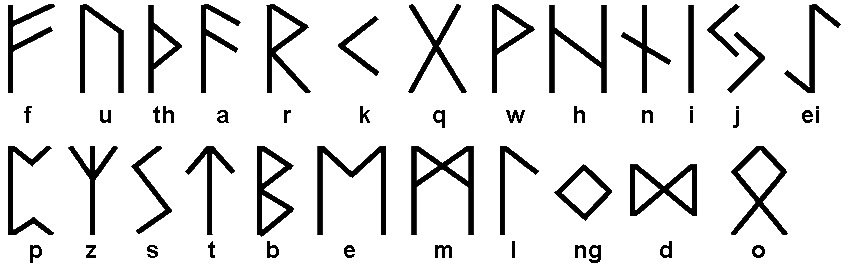
The Elder Futhark (above) was later simplified in Scandinavia to the Younger Futhark with only 16 characters:
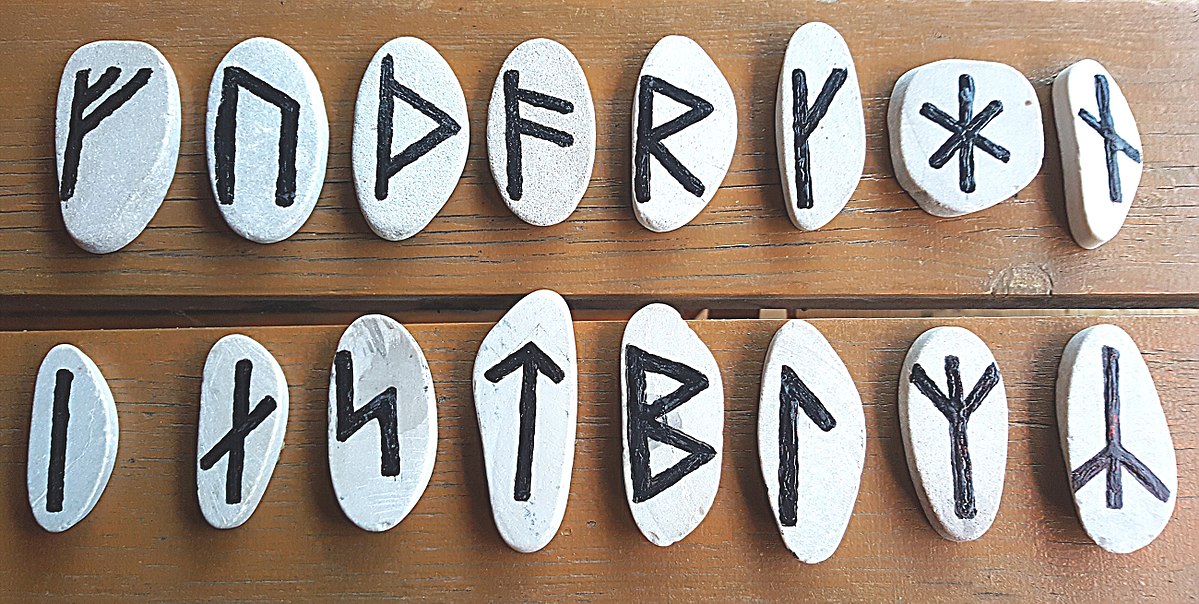
The Younger Futhark was in use from about the 9th century. The reduction of letters happened gradually, but paradoxically at the same time when phonetic changes led to a greater number of different phonemes in the spoken language as Proto-Norse was evolving into Old Norse.
There are also other variations of rune alphabets, but if you are lucky to spot a runestone, you get pretty far in reading it (which is of course not the same as understanding it) merely by knowing the alphabets in the images above. That is of course a task in itself! Good luck!
Updated 16.10.2021
Elder Futhark (Germanic runes) - Runestone (W) - Younger Futhark (Scandinavian runes)