Welcome back to Language Day! If you haven’t read the introduction yet, please do it here. This time we deal with the etymology of weekdays in a few languages. The first day of the week varies in different countries and cultures, but let’s take here Sunday as the first day for the sake of convenience.
This may get a bit complicated and confusing, and if it does, just pick one or two languages, and go from there. Let us start with Latin. The days from Sunday to Saturday. All the seven ancient planets are involved here, i.e. the planets visible to the naked eye.
Sunday is the day dedicated for the Sun, Monday for the Moon, Tuesday for Mars, Wednesday for Mercury, Thursday for Jupiter, Friday for Venus and Saturday for Saturn. That simple. Here’s the Latin week:
diēs Sōlis - diēs Lūnae - diēs Mārtis - diēs Mercuriī
diēs Iovis - diēs Veneris - diēs Sabbatī\Sāturnī
The use of planetary designation is still valid, but in most languages the name of the planet is in the front. So for example in German: Sonntag, Montag and so on. Same goes for English: Sunday, Monday etc. But were does Wednesday come from? The Old English word for Wednesday indicates that the day was named for the Germanic god Woden. And German’s Mittwoch simply means middle of the week - just like in Finnish.
Sunday - Monday - Tuesday - Wednesday - Thursday - Friday - Saturday (English)
The French, Spanish and Italian follow the same pattern as Latin from Monday thru Friday. Lundi-lunes-lunedí, mardi-martes-martedi and so on.
dimanche - lundi - mardi - mercredi - jeudi - vendredi - samedi (French)
domingo - lunes - martes - miércoles - jueves - viernes - sábado (Spanish)
domenica - lunedí - martedi - mercoledi - giovedi - venerdi - sàbato (Italian)
And almost the same goes for the German week. Sonntag is Sun’s day, Montag the Moon’s, Donnerstag is Thunder Day i.e. Jupiter Day, and Freitag is Frea Day.
Sonntag - Montag - Dienstag - Mittwoch -Donnerstag - Freitag - Samstag
In Portuguese they make it simple. Sunday is domingo, and Saturday sábado, but everything in between is just second day, third day and so on:
domingo - segunda-feira - terça-feira - quarta-feira - **quinta-feira - sexta-feira -sábado **
Then comes the Nordic languages, and we start with Icelandic, the basis of it all.
Sunnudagur - mánudagur - þriðjudagur - miðvikudagur - fimmtudagur - föstudagur - laugardagur
Icelandic has a bit of the same pattern as Portuguese in that it counts days of the week from Tuesday on. Tuesday is the third day, Wednesday the fourth and Thursday the fifth. Friday is föstudagur, the day to fast, and Saturday laugardagur, the day to wash.
Long time ago that old Nordic word laugardagur was pronounced like it is today in the Finnish word lauantai and the Estonian laupäev, and later on like today’s Scandinavian lördag/lørdag. But they all have in common that root - to wash. Saturday has traditionally always been the day to cleanse oneself and to do the laundry.
söndag - måndag - tisdag - onsdag - torsdag - fredag - lördag (Swedish)
søndag - mandag - tirsdag - onsdag - torsdag - fredag - lørdag (Norwegian)
søndag - mandag - tirsdag - onsdag - torsdag - fredag - lørdag (Danish)
Finnish is not a Scandinavian language, but culturally and historically takes after the Scandinavian naming of weekdays. You can discern the roots in the first syllable of the day - sun-nuntai, -maa-nantai, tiis-tai, and so on. Only Wednesday is different - like the German Mittwoch, keskiviikko, i.e. middle of the week. Then continue with the Nordic theme: tors-tai, per-jantai and lauan-tai.
sunnuntai - maanantai - tiistai - keskiviikko - torstai - perjantai - lauantai (Finnish)
pühapäev - esmaspäev - teisipäev - kolmapäev - neljapäev - reede - laupäev (Estonian)
The Finns readily recognize the word for Sunday in the Estonian language, since the prefix is the same - pyhä/püha - meaning holy. Monday thru Thursday take another turn, denoting the fact that the Estonians count the week from Monday: first day, second day, third day and fourth day. Friday/reede is on the other hand from the Germanic languages, sounding like the Swedish Fredag without the letter f in the beginning. And laupäev is, like said, from the old Nordic root for washing.
Then let’s look finally at Greek, Russian, Japanese and Swahili. For those of you who know any of these languages, this is easier. For others I will try to explain some of the characteristics.
First Greek. Same goes here as in many other languages. Sunday is on its own, Monday is day number two, Tuesday is the third day, Wednesday the fourth, Thursday the fifth. Then comes Friday and Saturday. Friday (Παρασκευή) means preparation (for the Sabbath), and Saturday (Σάββατο) being the Sabbath, i.e. day of rest (like it is for Jews).
**Κυριακή - Δευτέρα - τρίτη - Τετάρτη - Πέμπτη - Παρασκευή - Σάββατο **
The Russians also count the week from Monday, and you can see it in the words for Tuesday/втóрник (second day), Thursday/четвéрг (fourth day) and Friday/пятница (fifth day).
воскресéнье - понедéльник - втóрник - средá - четвéрг - пятница - суббóта
The word for Saturday is for Sabbath, the root for Sunday is resurrection, and Wednesday/средá denotes, once again, its position in the middle of the week. So we have one day left, Monday/ понедéльник (ponedelnik). It literally means “day after nonworking day”.
Japanese follows, perhaps a bit surprisingly, the old Latin with planetary names. From Sunday on we have Moon-day/getsuyoobi, Mars-day/kayoobi, Mercury-day/suiyoobi, Jupiter-day/mokuyoobi, Venus-day/kinyoobi and finally Saturn-day/doyoobi. For those interested, there is an educational video on weekdays in Japanese at the bottom of this article. It shows how e.g. the kanji for Mercury also has to do with water and swimming, and the one for Venus with money, or actually gold. And Saturn’s Day also means day of work. A quick way to say the whole week is to think about the Sun, Moon, fire, water, tree, gold and work.
nichiyoobi 日曜日 - getsuyoobi 月曜日 - kayoobi 火曜日 - suiyoobi 水曜日 - mokuyoobi 木曜日 - kinyoobi 金曜日 - doyoobi 土曜日
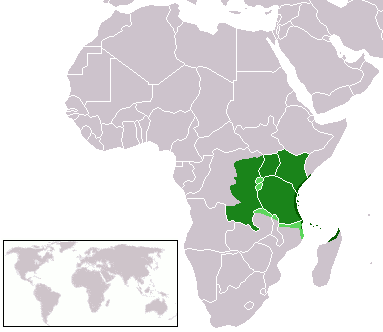
Finally, let’s take an African language. Swahili - the lingua franca of the African Great Lakes region and other parts of eastern and south-eastern Africa. The word for week in Swahili is juma, and the first day of the week is actually Saturday. So from Saturday on we have numbered days, until Wednesday, which is the fifth day of the week. The only days breaking this pattern are Thursday and Friday.
Thursday/Alhamisi is derived from Arabic al-kamis, meaning day-five. A bit strange since we already have day five, Wednesday. Friday/Ijumaa is derived from the Arabic al-jum-a which has a meaning related to “gathering". That same root is seen in quite a few languages in the Middle East as well as the nearby countries and cultures. So, the week a la Swahili, starting from Saturday:
Jumamosi - Jumapili - Jumatatu - Jumanne - Jumatano - Alhamisi - Ijumaa
That concludes our dabble in weekdays. But if you still haven’t got enough of them, check here for some more takes on the subject.
Have a great day!
https://www.youtube.com/watch?v=gGr9P_sFkfM
Updated 29.8.2019