

As you start researching into your family history, you quite soon come to realize the vastness of the task. The numbers keep doubling up as we move backwards in time. Starting with two parents, we would end up literally with thousands of forefathers and -mothers. But luckily we never need to deal with all of that data as most of us know only of a few generations backwards.
Nevertheless, let’s look at some of these figures. We start with you and your parents, and move gradually further in time. And the information given below is as follows: the relationship, then in the brackets how many individuals it comprises, then the approximate years from us if we take 30 years as the length of one generation, and the last figure is the genetical percentage of us, starting from 100% downwards. For example, there is 6,25% genetical material in you from each of your great great grandparent.
you (1) 0 years - 100%
parents (2) 30 years - 50%
grandparents (4) 60 years - 25%
great grandparents (8) 90 years - 12,5%
2nd GG (16) 120 years - 6.25%
3rd GG (32) 150 years - 3.125%
4th GG (64) 180 years - 1.563%
5th GG (128) 210 years - 0.781%
6th GG (256) 240 years - 0.391%
7th GG (512) 270 years - 0.195%
8th GG (1024) 300 years - 0.098%
9th GG (2048) 330 years - 0.049%
10th GG (4096) 360 years - 0.024%
and so on…
So, anyone can see that it is truly a tremendous task to keep up with your family records. Especially if they extend to, say, that tenth great grandparents - twelfve generations from you. Let alone longer! We do have tools available to do this, but sometimes you get the clearest picture by getting yourself a roll of paper that you extend on the wall, and start scribbling there your ancestors. But it would have to be a long wall, for many of us!
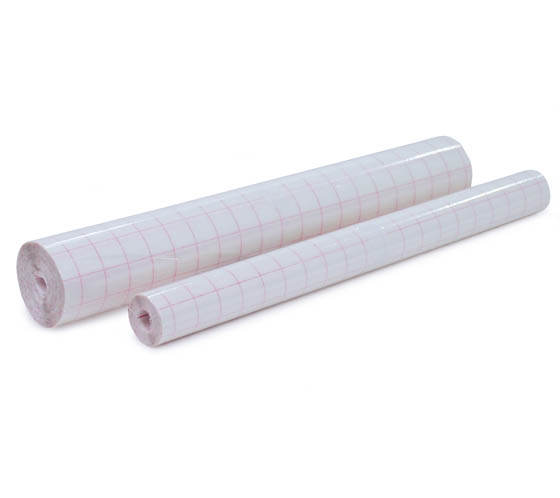
If you do it this way, all the while collecting the data digitally as well, your work will be rewarded with an easily observable roll that you could take with you to relatives for what would probably be a much appreciated viewing. The roll could for example be the paper residue of a contact paper roll where you fill in the squares with your family data - either by writing straight in the squares or by attaching written stickers on them. One thing to remember though: don’t underestimate the lengths that you might reach in your research. Even though many of the lines you would follow will end up in unknowns (mothers and fathers are unknown so there is no way to get further in that line), you would still also have a few lines that extend further back in time.
Updated 18.4.2023